 United StatesJFK
 MexicoMEX
 BrazilGRU
 ArgentinaEZE
 ChileSCL
 ColombiaBOG
 PeruLIM
 PanamaPTY
 Costa RicaSJO
 Dominican RepublicPUJ
 JamaicaMBJ
 BahamasNAS
 BarbadosBGI
 United KingdomLHR
 IrelandDUB
 FranceCDG
 GermanyFRA
 NetherlandsAMS
 BelgiumBRU
 SwitzerlandZRH
 AustriaVIE
 ItalyFCO
 SpainMAD
 PortugalLIS
 GreeceATH
 TurkeyIST
 DenmarkCPH
 SwedenARN
 NorwayOSL
 FinlandHEL
 PolandWAW
 Czech RepublicPRG
 HungaryBUD
 IcelandKEF
 United Arab EmiratesDXB
 QatarDOH
 Saudi ArabiaRUH
 IsraelTLV
 EgyptCAI
 MoroccoCMN
 South AfricaJNB
 KenyaNBO
 NigeriaLOS
 IndiaDEL
 PakistanLHE
 Sri LankaCMB
 SingaporeSIN
 MalaysiaKUL
 ThailandBKK
 VietnamSGN
 PhilippinesMNL
 IndonesiaCGK
 Hong KongHKG
 ChinaPVG
 TaiwanTPE
 JapanHND
 South KoreaICN
 AustraliaSYD
 New ZealandAKL
Train station limo service for Canada's main rail hubs
A train station limo is one of the quieter pleasures of travelling in Canada. You step off a VIA Rail train, walk out through a heritage concourse, and the person with your name on the screen is already outside. LimousineCanada.ca runs pre-booked chauffeur transfers at the five stations where most intercity rail passengers begin and end their journeys: Toronto Union Station, Montréal Central Station, Ottawa, Québec City's Gare du Palais, and Pacific Central Station in Vancouver.
This page is the overview. It explains what the national rail network looks like, how a chauffeured pickup works at a large station, how the five stations compare, and when the train, a flight or a car is the better choice for a given trip. Each station has its own page with the details of its entrances and surrounding streets, and they are linked below.
If you already know where you are going, you can check a fixed fare straight away.
What trains run across Canada?

VIA Rail runs Canada's intercity passenger network. The busiest line is the Corridor between Québec City and Windsor, through Montréal, Ottawa and Toronto. Long-distance trains include The Canadian between Toronto and Vancouver and The Ocean between Montréal and Halifax. GO Transit handles commuter rail around Toronto.
Three families of service matter to most travellers.
- The Corridor. VIA's own description is the busiest route in the country, connecting Québec and Ontario through Québec City, Montréal, Ottawa, Toronto and Windsor.
- Long-distance trains. The Canadian crosses the country from Toronto to Vancouver, and The Ocean runs overnight from Montréal to Halifax. Regional trains, such as The Skeena from Jasper to Prince Rupert, extend the network into the west.
- Commuter and regional rail. GO Transit serves the Greater Toronto and Hamilton area from Union Station. It is separate from VIA and runs on its own timetable.
Schedules and operating days change by season, so use VIA's train schedules for the day you are travelling. We refer below to timetables as published at the time of writing.
The VIA Rail Corridor: Québec City to Windsor
For intercity travellers in Ontario and Québec, the Corridor is the train that matters. VIA publishes average journey times and distances for each pairing, and they are the best guide to planning a pickup.

| Route | Average journey | Distance (rail) | Frequency (per week) |
|---|---|---|---|
| Toronto to Montréal | about 5 hr 13 min | 538 km | 40 departures |
| Toronto to Ottawa | about 4 hr 32 min | 444 km | 54 departures |
| Ottawa to Montréal | about 2 hr | 185 km | 34 departures |
| Montréal to Québec City | about 3 hr 26 min | 270 km | 34 departures |
One change is worth knowing about. VIA has announced Corridor schedule adjustments effective October 25, 2026. Overall, the change will mean an average of one fewer daily train between Ottawa and Toronto, with Train 641 discontinued, and VIA will stop serving Guildwood and Malton to speed up journeys. If your pickup depends on a particular train number, check it after that date. Details are in VIA's announcement of the Corridor changes.
The Canadian and The Ocean
The long-distance trains operate on different rhythms. The Canadian leaves Vancouver at 15:00 Pacific time and arrives in Toronto at 14:29 Eastern time on day five, which means four nights on board. VIA's timetable lists two departures a week on that route, in two seasonal blocks that run until October 30, 2026 and from November 2, 2026 to March 12, 2027. The Toronto to Jasper leg alone covers about 3,546 km.
The Ocean is a smaller commitment: an overnight service from Montréal to Halifax of one night and one day, over roughly 1,350 km, calling at Campbellton, Moncton and Truro. VIA lists three departures a week.
For chauffeurs, the practical consequences are simple. These trains arrive on fixed days, often at unsocial hours, and arrival times can slip over such long distances. A driver who tracks the train rather than the clock is more useful than one who waits at a single time. Our Vancouver Pacific Central page covers the western end of The Canadian in detail.

GO Transit and commuter rail around Toronto
GO Transit is not VIA, but it shares Toronto Union Station with it. GO describes Union as the largest transit hub in its rail system. The station sees over 200,000 travellers a day, mostly commuters from across the Greater Toronto and Hamilton Area, and the same complex houses the GO Bus Terminal, a TTC station and links to the PATH network. The GO lines that enter Union include Lakeshore West and Lakeshore East, Barrie, Kitchener, Milton, Stouffville and Richmond Hill.
For a visitor, GO matters in two ways. It is the cheap, practical way to reach Hamilton, Oshawa or Niagara, and it is also the reason Union Station can be crowded at rush hours, which affects kerb access. If you are meeting a train at Union in the late afternoon, a driver who knows the Front Street drop-off will plan around the peak. See our Toronto limo service for the wider city picture.
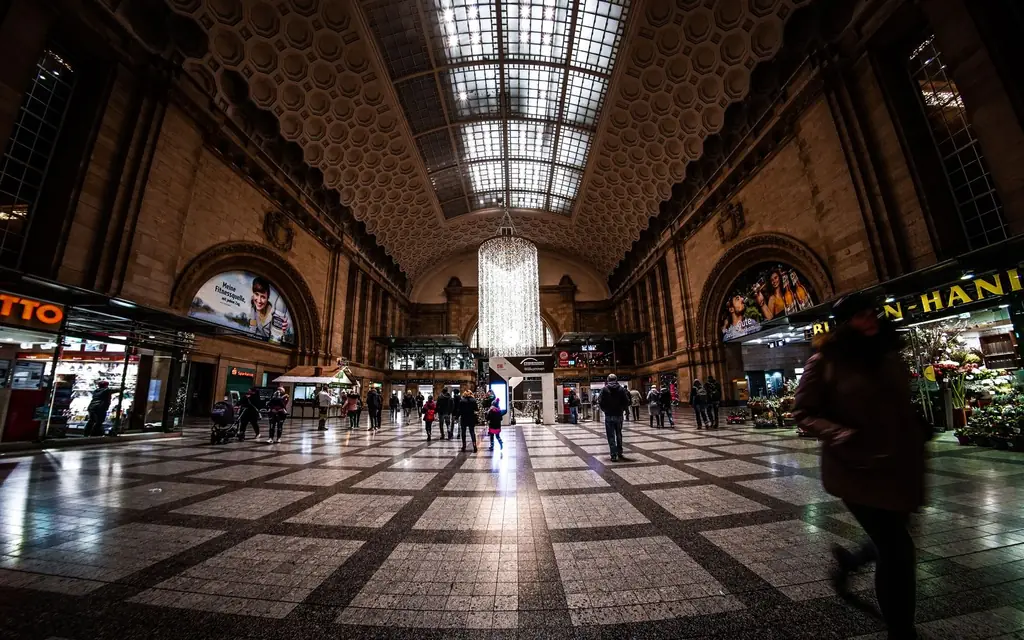
How a chauffeured pickup works at a big station
Large stations differ from airports in one important way. A rail passenger walks out of a concourse that may have several exits, with no arrivals hall and a platform number that is announced late. A good pickup is therefore about agreeing the right door in advance.
- Booking. Enter the train number, date and arrival station. The booker holds the pickup against the train rather than a fixed time.
- Tracking. Your driver monitors the train's progress. If it is late, the pickup moves with it at no extra charge.
- Meeting point. Your confirmation states where the car will be waiting. At most stations, VIA designates a curbside drop-off and pick-up zone in front of the main entrance, and your driver uses it.
- Meet and greet. For a name-board greeting at the platform exit or concourse, add $100 to $150. It is useful at large, busy stations.
- Luggage. The driver loads the bags and you leave the station without queuing.
Included waiting time starts at arrival: 30 minutes for domestic trips, and 60 minutes for international arrivals such as Amtrak Cascades from Seattle.
The five stations compared
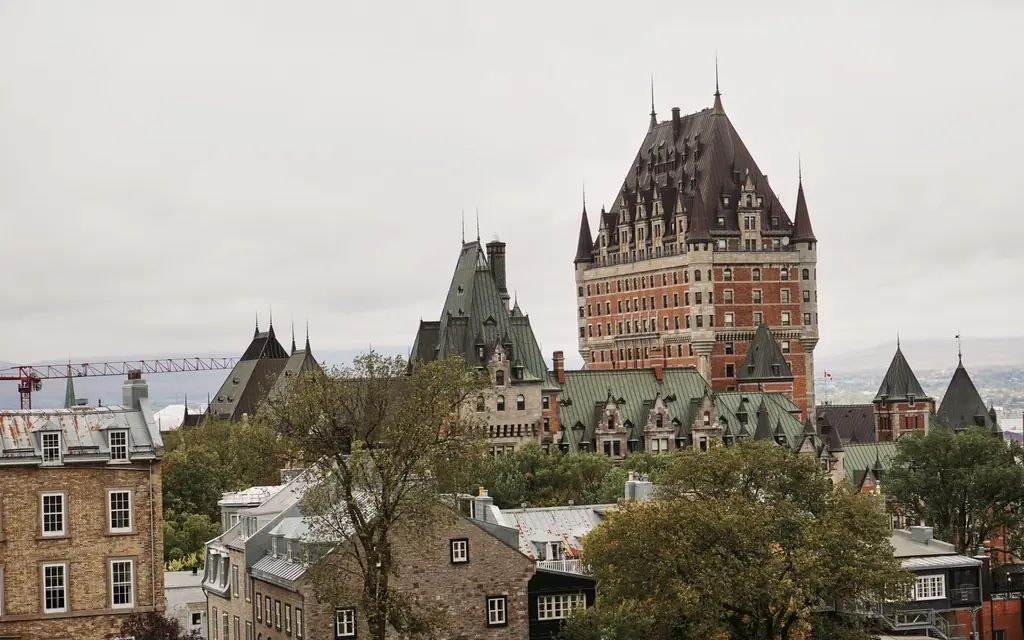
| Station | Address | Where the car stops | Local connections |
|---|---|---|---|
| Toronto Union Station | 65 Front Street West | Curbside zone in front of the main entrance on Front Street | GO Transit, UP Express, TTC, PATH |
| Montréal Central Station | 895 de la Gauchetière Ouest | Accessible drop-off to the left of the main entrance, under the Queen Elizabeth Hotel | Bonaventure and McGill Metro |
| Ottawa station | 200 Tremblay Road | Accessible pick-up zone directly in front of the main entrance | About 4 km from downtown, off the Vanier Parkway |
| Québec City Gare du Palais | 450 rue de la Gare-du-Palais | Sidewalk in front of the main entrance on rue de la Gare-du-Palais | Intercar buses at 320 rue Abraham-Martin |
| Vancouver Pacific Central | 1150 Station Street | Curbside loading zone to the left of the main entrance | SkyTrain Main Street-Science World |
The information on kerbs comes from VIA's own station pages. Station layouts and rules change, so the instructions in your booking confirmation override anything printed here. Each station has its own page with more detail:
- Union Station Toronto limo
- Montréal Central Station car service
- Ottawa train station limo
- Pacific Central Station Vancouver limo
- Québec City Gare du Palais limo
Is it better to take the train, fly or drive?

For Toronto to Montréal, the train takes about 5 hours 13 minutes centre to centre, driving takes about 5.5 hours for roughly 540 km, and flying takes under two hours in the air plus airport time. The train is usually the most relaxed. A chauffeured car is the most flexible door to door.
The right choice depends on what you are carrying and where you are going at each end.
| Way to travel | Cost for Toronto to Montréal | Time | Best for |
|---|---|---|---|
| VIA Rail Economy or Business | fares vary by day, class and booking date, see viarail.ca | about 5 hr 13 min station to station | Solo travellers and anyone who wants to work or rest |
| Flying | fares vary widely | under 2 hr in the air, plus airport time at both ends | Short-notice trips where speed matters |
| Driving yourself | fuel, tolls and parking | about 5.5 hr for 540 km | Groups who need a car at the destination |
| Chauffeured sedan, door to door | $2,515-$3,000 for up to 3 passengers | about 5.5 hr | Two or three travellers with luggage who want one seamless journey |
| Chauffeured Sprinter | $4,455-$5,350 for 12-14 passengers | about 5.5 hr | Teams, wedding parties, group travel |
The train wins on comfort and price per person for most solo trips, and we will say so. It is also straightforward for city-centre to city-centre trips, as all five stations are in or near the centre. Where a chauffeur adds real value is at the ends: a car waiting at the platform, and a car to take you from a city-centre station to a suburban hotel, a business park or a home with children and luggage.
Door-to-door intercity transfers as an alternative to the train
Some journeys are better by road. A family of five with car seats, a delegation of twelve with laptops and trade-show crates, or a couple who simply prefer to leave from their front door can book an intercity transfer. The same rate card applies, based on distance with no surprises.
| Intercity trip | Approx. distance and time | Executive Sedan (3 pax) | Luxury SUV (6 pax) | Executive Sprinter (12-14 pax) |
|---|---|---|---|---|
| Toronto to Ottawa | 450 km, about 4.5 hr | $2,095-$2,500 | $2,635-$3,175 | $3,715-$4,455 |
| Ottawa to Montréal | 200 km, about 2 hr | $930-$1,110 | $1,170-$1,410 | $1,650-$1,980 |
| Montréal to Québec City | 260 km, about 2.5 hr | $1,210-$1,440 | $1,525-$1,830 | $2,145-$2,575 |
| Toronto to Montréal | 540 km, about 5.5 hr | $2,515-$3,000 | $3,160-$3,810 | $4,455-$5,350 |
These are one-way fares before tax, with tolls such as the 407 ETR extra and gratuity at your discretion. Distances are approximate road distances; the booker calculates the exact fare for your pickup and drop-off addresses. If a driver must wait in the destination city or return to the start, the booker quotes that as well.
Luggage on the train and in the car
Trains are generous about luggage compared with aircraft, but you still carry it yourself. A vehicle booking means someone else lifts it. Our Executive Sedan takes two large bags and two carry-ons for three passengers. The Luxury SUV carries six passengers with five or six large bags, and the Executive Sprinter takes twelve or more. See the fleet page for seating by vehicle.
On the train side, remember that baggage services vary by train and class. VIA's Toronto to Montréal timetable, for example, marks baggage check-in as not available on several Business Class services, so check what applies to your ticket. Stations also offer left-baggage facilities. Pacific Central in Vancouver, for instance, charges $6 per bag for storage on the day of travel only.
Airport-to-station and station-to-airport transfers
Many rail journeys start or finish at an airport. VIA runs its own shuttle between Montréal-Trudeau and Montréal Central Station, and Toronto has the UP Express between Pearson and Union. A private car still makes sense when you are travelling with a group, carrying a lot of luggage, or when timetables do not line up.
We cover each of the cities' airports, including Montréal Trudeau, Ottawa, Québec City and Vancouver, and our general airport limo service page explains how those transfers work.
Booking your train station transfer
Enter the station, train number, travel date and passengers on our own booker. It returns an exact all-in fare for your address and holds the pickup against your train. There is no go-between; you deal with LimousineCanada.ca itself.
Our cancellation terms are measured from the scheduled pickup time. More than 72 hours' notice is free, 72 hours or less is 10%, 48 hours or less is 50%, and 24 hours or less, or a no-show, is 100%.
For the stations themselves, VIA's official pages cover Toronto Union Station and Pacific Central Station, and GO Transit publishes a guide to Union Station. Our general limo service page covers what is included with every booking.
Frequently asked questions
Can I book a limo to meet my VIA Rail train?
Yes. Enter the train number, date and arrival station on the booker. Your driver tracks the train, so a delay moves the pickup at no extra charge. Your confirmation states where the car will wait, normally the station's designated curbside zone near the main entrance.
Which train stations do you serve?
We serve Toronto Union Station, Montréal Central Station, Ottawa station, Québec City's Gare du Palais and Pacific Central Station in Vancouver. Each has its own page with entrance and kerb detail, linked from this guide.
How much is a limo from a train station to the airport?
From a city-centre station to an airport in the same city, an Executive Sedan is usually the $145 to $175 minimum, a Luxury SUV $180 to $220, and an Executive Sprinter $295 to $355. Longer distances are priced by the kilometre. The booker will return the exact all-in fare.
Is the train cheaper than a chauffeured car between cities?
For one or two travellers, usually yes, because train fares vary by day and class and are often lower than a private car over 500 km. A chauffeured car becomes competitive for groups, for heavy luggage, and for trips with awkward start and end points.
How long is the train from Toronto to Montréal?
VIA lists an average journey of about 5 hours 13 minutes over 538 km, with around 40 departures a week. Driving the same route takes about 5.5 hours. A flight is under two hours in the air, plus time at the airports.
What is the difference between VIA Rail and GO Transit?
VIA Rail is the national intercity passenger service, linking cities such as Toronto, Ottawa, Montréal and Québec City. GO Transit is a regional commuter service around Toronto and Hamilton. Both use Toronto Union Station, but they run separate timetables and tickets.
What happens if my train is late?
Your driver follows the train, not the clock. Included waiting time starts at the train's actual arrival. If a long delay or cancellation affects your trip, message us as soon as you know and we will help to reorganise the pickup.
Can you carry skis, golf clubs or large cases from the station?
Yes. Choose the Luxury SUV or Executive Sprinter for bulky luggage, and note the items when you book so the right vehicle is assigned. The sedan takes two large bags and two carry-ons for three passengers.
Is there a free child seat?
Yes. Child seats cost nothing when requested at booking. Give the child's age and weight in the notes.