 United StatesJFK
 MexicoMEX
 BrazilGRU
 ArgentinaEZE
 ChileSCL
 ColombiaBOG
 PeruLIM
 PanamaPTY
 Costa RicaSJO
 Dominican RepublicPUJ
 JamaicaMBJ
 BahamasNAS
 BarbadosBGI
 United KingdomLHR
 IrelandDUB
 FranceCDG
 GermanyFRA
 NetherlandsAMS
 BelgiumBRU
 SwitzerlandZRH
 AustriaVIE
 ItalyFCO
 SpainMAD
 PortugalLIS
 GreeceATH
 TurkeyIST
 DenmarkCPH
 SwedenARN
 NorwayOSL
 FinlandHEL
 PolandWAW
 Czech RepublicPRG
 HungaryBUD
 IcelandKEF
 United Arab EmiratesDXB
 QatarDOH
 Saudi ArabiaRUH
 IsraelTLV
 EgyptCAI
 MoroccoCMN
 South AfricaJNB
 KenyaNBO
 NigeriaLOS
 IndiaDEL
 PakistanLHE
 Sri LankaCMB
 SingaporeSIN
 MalaysiaKUL
 ThailandBKK
 VietnamSGN
 PhilippinesMNL
 IndonesiaCGK
 Hong KongHKG
 ChinaPVG
 TaiwanTPE
 JapanHND
 South KoreaICN
 AustraliaSYD
 New ZealandAKL
When people search for a limo service in Canada, most results look alike: a black car, a photograph of a lobby, a request for a quote. The differences show up later, at the curb, on the invoice, or at 4 a.m. when a flight lands early. LimousineCanada.ca is built around the details that decide whether a pre-booked chauffeur is worth paying for, and this page sets them out plainly so you can weigh them against any other chauffeur service you are considering.
Nothing here is a ranking and nothing is a claim about another company. It is a description of how we operate, followed by the questions worth asking anyone who wants to drive you.
Why book a limo with LimousineCanada.ca instead of another limo company?
You can read the rate card before you book, the car is tracked against your flight, the first 30 or 60 minutes of waiting after landing are free, and cancellation terms are fixed in advance. You book on LimousineCanada.ca itself, so there is no marketplace between you and the chauffeur.
Those are five practical differences, and each one removes a particular kind of surprise. Published prices remove the surprise at checkout. Flight tracking removes the surprise of a delayed arrival. Free waiting time removes the surprise of a clock running while you are still at the baggage belt. A written cancellation scale removes the surprise of a dispute. Booking direct removes the surprise of discovering that the company you paid is not the company that arrives.
The sections below take them one at a time. If you only need numbers, jump to our rate card or ask the online booker for the exact fare to your address.
Limo rates published in Canadian dollars
A rate card that sits behind a form is not a rate card. Ours is stated in full, in CAD, before tax, with tolls such as the 407 ETR extra and gratuity left to you.

| Vehicle | Seats and luggage | Per-km transfer | Minimum transfer | Hourly (minimum hours) |
|---|---|---|---|---|
| Executive Sedan | 3 passengers, 2 large bags plus 2 carry-on | $4.65 to $5.55 per km | $145 to $175 | $135 to $165 per hour (2) |
| Luxury SUV | 6 passengers, 5 to 6 large bags | $5.85 to $7.05 per km | $180 to $220 | $175 to $210 per hour (2) |
| Executive Sprinter | 12 to 14 passengers, 12+ bags | $8.25 to $9.90 per km | $295 to $355 | $240 to $295 per hour (3) |
| Stretch limousine | 8 to 10 passengers | not offered per km | not offered | $225 to $300 per hour (3) |
| Mini-coach or party bus | 20 to 30 passengers | not offered per km | not offered | $300 to $420 per hour (4) |
A transfer is priced as kilometres multiplied by the low and high rate, never below the minimum, then rounded to the nearest $5. A 17 km airport run in a sedan works out to about $79 to $94 on the meter, so the $145 to $175 minimum applies. A 60 km highway run in the same sedan comes to $280 to $335. The online booker applies the same arithmetic to the exact pickup and drop-off addresses and shows one all-in figure, which is the number you actually pay.
Ranges exist because a price moves with the address, the hour of the day and the route. We would rather show you the range and then the exact fare than hide the range.
Commercial insurance, licensing and licensed chauffeurs
Chauffeured transportation for hire is regulated by cities and provinces, and the rules differ enough that it is worth knowing what they are. Every vehicle we dispatch operates under commercial for-hire insurance, and chauffeurs work within the licensing regime of the city where the trip is based.
Some examples of what that regime looks like, taken from the regulators themselves:
- Toronto. The City of Toronto requires anyone who owns a limousine driven for money to hold a limousine owner licence, and applicants must show proof of $2,000,000 in commercial general liability insurance. Limousines must also run winter tires from December 1 to April 30. The details are on the City's limousine owner page.
- British Columbia. Limousine operators need a passenger transportation licence with special authorization from the Passenger Transportation Board, and may only charge rates the Board has approved. See the Board's limousine and shuttle page.
- Québec. Paid passenger transport by automobile must use a qualified vehicle driven by a qualified driver, and the Commission des transports du Québec oversees the transport systems behind them, as its passenger transport FAQ explains.
The practical point: a legitimate operator can tell you which licence it works under in your city and can show proof of insurance on request. Ask any company, including us, and be wary of anyone who cannot answer in one sentence.
A four-year vehicle standard
Age limits for for-hire vehicles are set locally, and they are generous. Toronto, for instance, allows limousines registered by the end of 2024 to be up to ten model years old until the end of 2028. Our own standard is stricter: vehicles in the fleet are no more than four model years old.
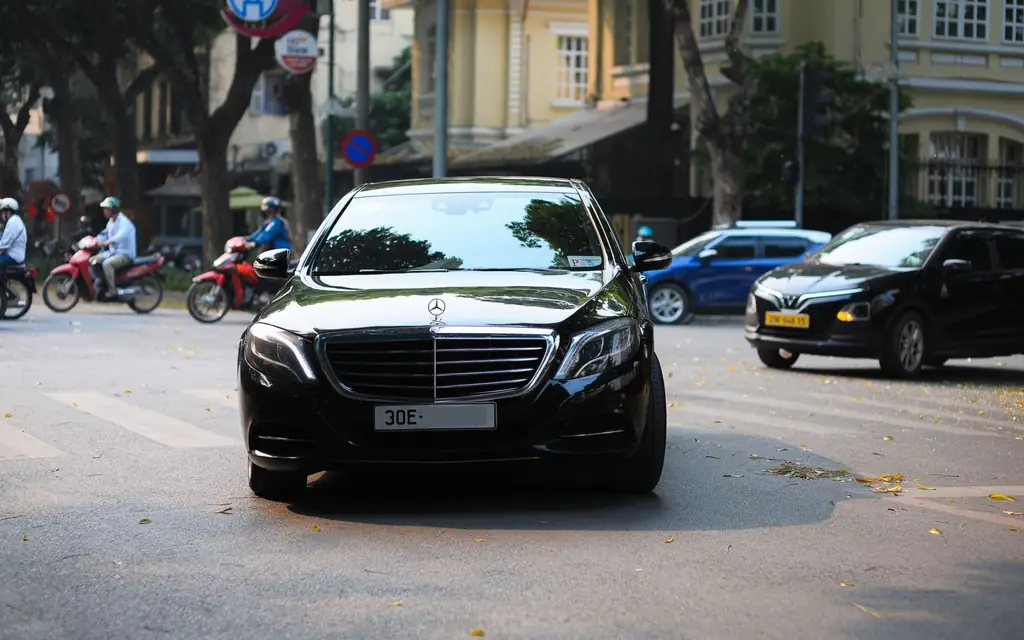
Why does that matter to a passenger? Newer vehicles carry current driver-assistance and safety equipment, hold their climate control in a Prairie January or an Ontario August, and are less likely to be the reason your 5 a.m. airport run turns into a roadside wait. It is also easier to describe what you are getting: a recent Executive Sedan, a recent Luxury SUV, a recent Sprinter. See the fleet page for the classes and what each one carries.
Flight tracking, early arrivals and late ones
On airport work, the chauffeur does not depend on the time printed on your ticket. The pickup is tied to the flight, so a delay of an hour moves your car by an hour, and a flight that lands early finds the car already staged. You do not need to phone a dispatcher to say you are late.
Tracking is included on every airport and terminal transfer. It matters most at the hubs that run on tight schedules: the long-haul arrivals at Montréal-Trudeau, the overnight redeye banks at Calgary, and the weather-prone approaches at Halifax.
Free wait time after landing
The clock matters as much as the kilometres. On international arrivals, the first 60 minutes after landing are free, which covers a full border and customs process on a busy afternoon. On domestic arrivals, the first 30 minutes are free. Time beyond the free window is chargeable, and the booking confirmation sets out how.

A name-board meet-and-greet inside the arrivals hall is available as an add-on for $100 to $150, which suits first-time visitors, older travellers and anyone arriving with heavy luggage. Child seats are supplied free when you ask for them at booking.
A cancellation policy that fits in a table
Cancellation terms are measured from the scheduled pickup time, not from when you booked.
| Notice given | Charge |
|---|---|
| More than 72 hours | No charge |
| 72 hours or less | 10% |
| 48 hours or less | 50% |
| 24 hours or less, or no-show | 100% |
Reading it once is enough. The scale is the whole policy, and it applies the same way to every booking.
Book direct on LimousineCanada.ca
Aggregators and ride apps sit between you and the operator. They take a margin, they decide which vehicle appears, and when something goes wrong you are dealing with a support queue rather than the company that owns the car. Booking on LimousineCanada.ca is a direct transaction: the fare you see in the booker is the fare for the trip, the confirmation names the vehicle class, and any change goes to the same team that dispatches your chauffeur.

We do not send readers to marketplaces, and nothing on this site ranks us against other companies by name. The case rests on the terms above.
Hub expertise: airports, FBOs, cruise terminals and stations
A good deal of what makes a transfer smooth is local: which door, which level, where a pre-arranged pickup is allowed to wait, how a ferry queue or a cruise disembarkation staggers its passengers. We organise the site around those transport hubs for exactly that reason.
- Airports from Halifax to Victoria, including Pearson and Vancouver.
- Private aviation terminals, where the car meets the aircraft rather than the arrivals hall.
- Cruise ports such as Vancouver's Canada Place and Halifax Pier 21.
- Train stations including Toronto Union Station.
If you are planning a trip that touches several of these, the travel desk is the place to start.
Vehicles sized to the luggage, not only the headcount
Most disappointing transfers come from a mismatch between bags and boot space. An Executive Sedan carries three passengers and two large suitcases plus two carry-on bags, which is generous for a business trip and tight for a family of three after a fortnight away. A Luxury SUV takes six passengers and five or six large bags. An Executive Sprinter handles a dozen or more people with twelve or more bags, and is the realistic choice for crews and wedding parties.
Tell the booker how many people and how many large bags you have and it will point you to the right class. Upgrading at the curb is slower and more expensive than choosing correctly in the first place.
Weddings, proms, corporate accounts and group nights out
The same terms apply to hourly work. Hourly minimums are two hours for sedans and SUVs, three for Sprinters and stretch limousines, and four for mini-coaches. We have written separate guides for the occasions that need more planning: wedding limos, prom limos, corporate car service and party bus rental. The full list sits on the services page.
Business customers can ask about an account with consolidated invoices and itemised receipts, which keeps expense reporting tidy.
What to ask any limo company before you pay
You do not need to take our word for any of this. A short checklist works on every operator:
- Which licence do you operate under in this city, and can I see proof of insurance?
- How old is the vehicle you will send?
- Is the price an all-in figure for my addresses, or a starting rate?
- What happens if my flight is late, and how long is the free wait?
- What exactly is the cancellation scale, measured from when?
- Who will be on the other end of the phone if the chauffeur cannot find me?
Any operator worth hiring should be able to answer all six in writing before you pay.
When another way of travelling is the better choice
A chauffeur is a comfort and a convenience, not a necessity, and in some cases another option is simply smarter.
| Option | Typical cost | Time | Suits |
|---|---|---|---|
| Airport rail or rapid transit | Lowest, a few dollars to low double digits | Fixed timetable, often 25 to 30 minutes into the core of a big city | Solo travellers with light luggage and no schedule pressure |
| Metered taxi | Moderate, metered | Door to door, subject to traffic | Short urban hops where nothing is pre-booked |
| Rideshare | Varies with demand | Door to door after a short wait | Spontaneous trips when cost is the priority |
| Hotel shuttle | Free to modest | Scheduled loop | Guests at hotels that run one |
| Pre-booked chauffeur | $145 to $175 minimum for a sedan | Door to door, timed to your flight | Families, groups, early starts, heavy bags, business arrivals |
If you are alone, travelling light, landing at midday and heading to a downtown hotel served by a train line, the train is the sensible answer. The chauffeur earns its fee when there are bags, children, a 5 a.m. departure, a meeting at the other end or more than two people sharing the cost. The longer comparison is on our limo versus rideshare page.
How booking works, step by step
- Open the online booker and enter pickup, drop-off, date and time.
- Add your flight number for airport trips.
- Choose the vehicle class and any extras, such as meet-and-greet or a child seat.
- Review the all-in fare for your exact addresses and confirm.
- Receive a confirmation that names the vehicle class and the pickup details.
Corporate and event bookings follow the same path, with a request note for anything unusual.
Frequently asked questions
Is LimousineCanada.ca cheaper than a taxi or rideshare?
Usually not for a short solo trip. A metered taxi or an app ride is often lower for a lone traveller going 10 to 15 km. A pre-booked car becomes competitive when there are several passengers, a lot of luggage, a fixed arrival time or a long run where per-kilometre pricing and a guaranteed vehicle matter.
Are your rates all-in?
The rate card is stated before tax, with tolls such as the 407 ETR extra and gratuity at your discretion. The online booker quotes one all-in fare for your exact addresses, and that is the figure to rely on.
How long will a chauffeur wait for me at the airport?
Sixty minutes free after an international landing and 30 minutes free after a domestic one, with flight tracking so the pickup follows the actual arrival. Waiting beyond that is chargeable, and the booking confirmation sets out how.
What does your cancellation policy cost me?
Nothing if you cancel more than 72 hours before the scheduled pickup. After that it is 10% at 72 hours or less, 50% at 48 hours or less, and 100% at 24 hours or less or for a no-show.
How old are your vehicles?
No more than four model years old. That is stricter than the ten-model-year ceiling some cities currently allow.
Do you provide child seats?
Yes, free of charge when you request one at booking. Ontario's rules exempt taxis, buses and public vehicles carrying fare-paying passengers from child car seat requirements but do not name limousines, so it is simplest to ask for a seat whenever a child is travelling.
Can I book for a company and get invoices?
Yes. Ask about a business account when you book and you will receive itemised receipts for expense reporting.
Do you serve small airports and smaller cities?
Our hub pages cover the major airports, private aviation terminals, cruise ports and train stations, and the booker handles addresses well beyond those. Browse all airports or enter your own pickup point.